
The Future of Survivorship Care
Survivorship Collective Charity is a nonprofit advancing safe, ethical, and accessible psycho-spiritual care for life after rupture.
We create state-regulated programs for patients and loved ones navigating the psychological and existential realities of serious illness, trauma and life after everything changes.
We are helping define how psychedelics and other existential care can be ethically and safely integrated beyond the clinical trial setting.
Survivorship begins the moment you are diagnosed.
As featured in:

The Reality of Survivorship
Modern healthcare is remarkably good at helping people survive.
But many of us are left asking a different question:
How do I live after everything has changed?
At Survivorship Collective, we believe that healing extends beyond medicine. It is about recovering a sense of belonging—to your body, to your community, to the natural world, and to a future that once felt impossible to imagine.
We serve people navigating experiences that transform the course of a life, including serious illness, trauma, profound grief, and other forms of existential suffering.
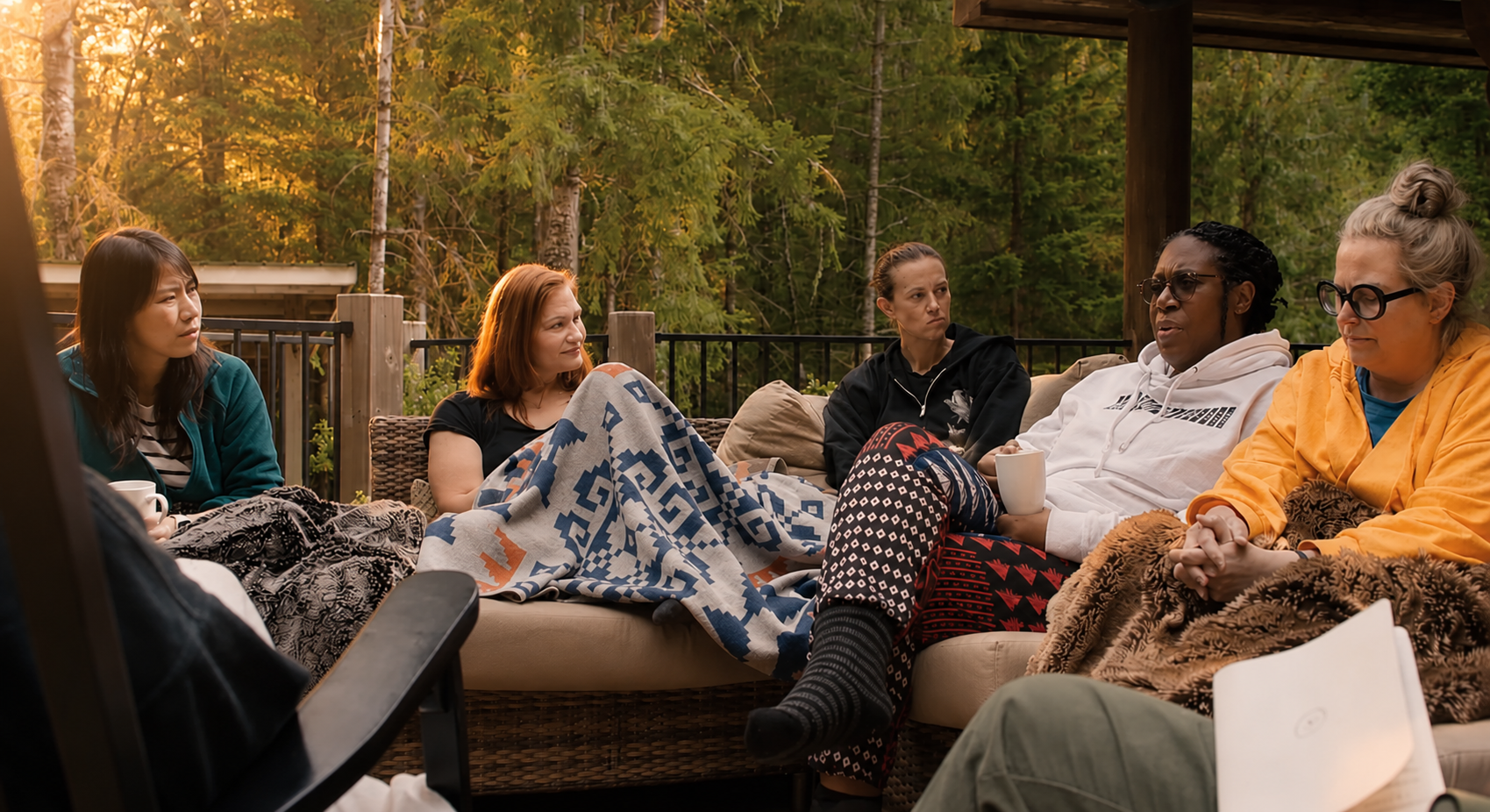
Our programs bring together evidence-informed care, somatic practices, Indigenous knowledge, ritual, philosophy, and the wisdom of community. Rather than asking people to heal alone, we create spaces where people heal alongside one another.
We believe the deepest healing is relational.
Not because suffering disappears.
But because we discover that we no longer have to carry it alone.

Where Survivors Struggle Most
Grief
Survivors grieve many things at once: their former body, their sense of safety, lost time, altered identity, and in many cases, the illness or death of others in their community.
Dissociation and disconnection
Many survivors report feeling detached from their bodies, their lives, or their sense of self. This can show up as numbness, disorientation, or difficulty re-engaging with everyday life.
Trauma and PTSD
Treatment is often a traumatic experience. Medical procedures, uncertainty, loss of control, and proximity to death can leave lasting psychological imprints that persist long after treatment ends.
Existential anxiety
Many survivors live with a persistent awareness of mortality. The fear of death does not disappear. It becomes quieter, more internal, and often more isolating.
Recurrence anxiety
Fear of recurrence is one of the most common and enduring forms of distress. It can shape daily decision-making, relationships, and the ability to plan for the future.
What Makes This Different
These challenges are not fully addressed by standard mental health care. They sit at the intersection of:
medical trauma & PTSD
identity disruption
mortality awareness
meaning-making
This is the space Survivorship Collective is designed to hold.

-
Voices of Esalen Podcast
-
What the Cancer Community Actually Needs from Psychedelic Care (Psychedelics Today)
-

Cedars Sinai Hospital Talk - Cancer and Psychedelics